
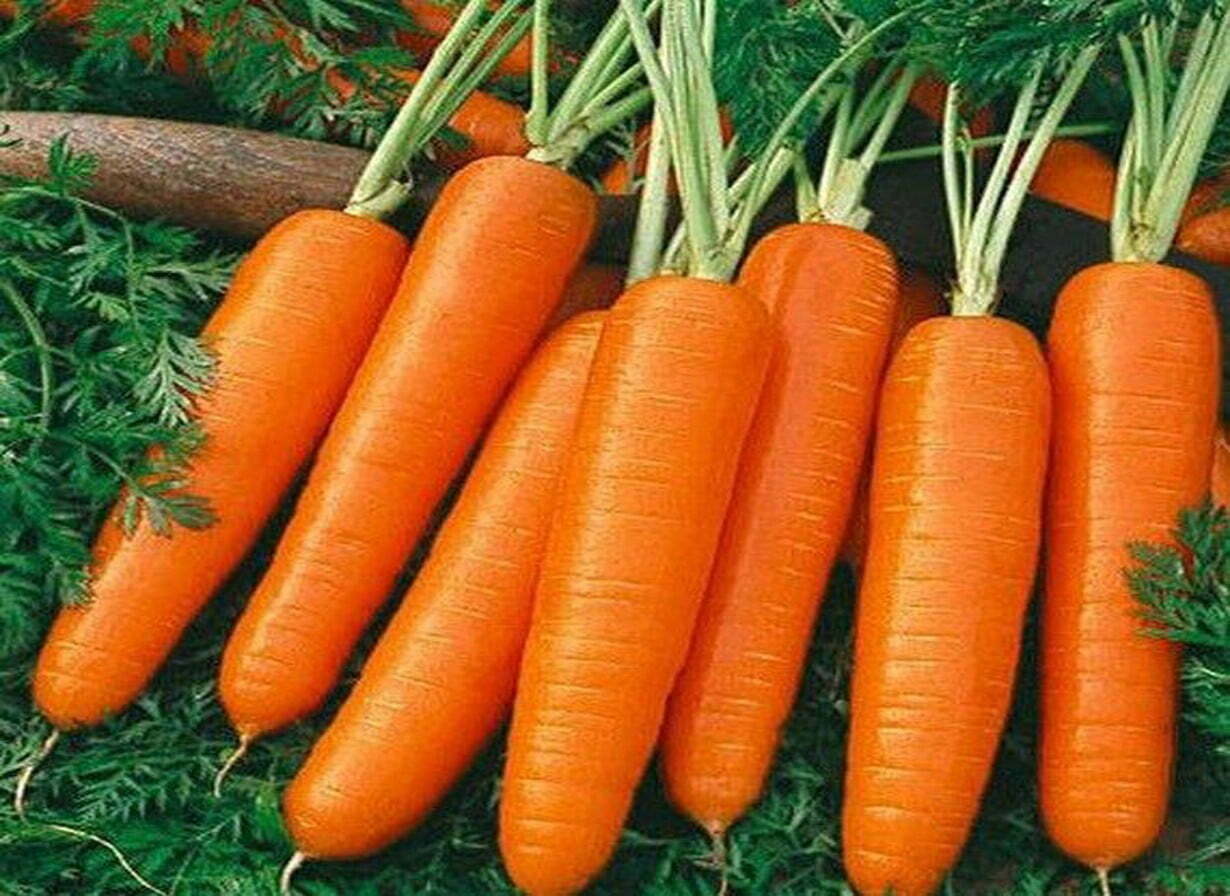
Carrot
Sweet carrots are quick and easy to grow! Like this.
- Garden
- Container garden
- Fruits and berries
- Herb Gardens
- Organic Gardens
- Tomato orchards
- Urban gardens
- Vegetable gardens
Perfect for backyard vegetable gardens! Carrots are easy to grow at home and can provide color, flavor, and nutrition to an organic gardener’s diet. This popular root vegetable performs best in cold temperatures (between 60-70˚F) and can be worked as early as your soil in the early spring. Heirloom varieties are sweet, crunchy, and tender – ready to be eaten in about 70 days.
Historians believe that the carrot originated in Central Asia about 5,000 years ago – in which purple and red were the first recorded, not orange! Carrots are low in calories, high in dietary fiber, and rich in health benefits, and contain essential nutrients such as vitamin A, vitamin C, minerals, antioxidants, and beta-carotene.
Choose from a large selection of herald carrot seeds available at Planet Natural. Planting instructions are included with each packet and shipping is free!
Quick Guide: Planting, Growing and Harvesting Carrots
1. Start your garden in the spring by planting carrots 2 weeks before the last frost.
2. Perfect root growth requires a well-worked, balanced soil
3. Straight seed, and for best germination, keep seed moist
4. Fresh, freeze, or store in the fridge or root cellar
5. Pests and diseases include carrot forests, flies, nematodes, birds, snails, and slugs.
site preparation:
Select a garden site in full sun or very light partial shade and prepare the soil with a sufficient amount of organic manure. Carrots grow to perfection when planted in deep, well-fertilized soil free of stones and debris. Grow tall varieties only if you can provide this type of soil. If your soil is heavy or rocky, choose smaller varieties.
Note: Soil filled with nitrogen can cause more foliage from the root, so make sure the soil is balanced before planting.
How to apply
Sow carrot seeds 2 weeks before your last frost date or 10 weeks before your first frost date. Sow seeds roughly 1 foot apart or 1 to 1-1 / 2 inch wide in rows. When the tops are 1 to 2 inches high, the thin individual plants are separated by 1 to 2 inches. Thin again when they start to the crowd. Cover crowns that push through the clay to prevent the top from becoming green or bitter. Carrots benefit from the emergence of compost manure applications until the top is 5 to 8 inches high.
Like all root crops, carrots require a lot of potassium-rich natural fertilizer. Rooting and splitting occur in roots due to uneven soil moisture or excessive nitrogen.
Tip: greensand is an organic soil amendment of the highest quality. Use it to supply potassium, an essential nutrient that promotes overall plant hardiness and disease resistance, as well as iron, copper, magnesium, silica, and 30 other trace minerals. Stuffed soil can also be used to loosen heavy clay soil.
Harvesting and storage
Allow 50 to 75 days from seed to maturity. Cut on finger shapes for best texture and flavor, and water before pulling them, to make harvesting easier. Extend the storage life of carrots by cutting all 1 inch of leaves and stem. To store in winter, pack in moist sawdust and keep cool.
Pest and disease problems
To prevent problems with diseases and insects, do not plant where carrots or parsley have been grown for three years (see Crop Rotation in the Home Garden). Rotted or dwarf plants can be caused by carrot rust fly. The maggot of this fly is often found chewing from the roots. If your plants are infested and the leaves are yellow, suspect nematode. Unlike beneficial nematodes, these micro-pests attack the roots of the plant causing gills (inflammation) to develop. Protect seedlings emerging from birds, snails, and slums. If transplanting is over, doubt stops. Check for soft rot of water on the stem on the soil line.
See more
Tip: One of the easiest ways to protect garden crops from flying insects is temporary row cover. To allow the plant to grow sluggish, simply cover the top of the seeds with garden staples or rocks that can be used to secure the cloth to the ground.
Seed saving instructions
This will be biennial cross-pollination, so set aside 1/4 mile from other carrots during the second year when the plants are going to seed. Plants can tolerate a mild frost, but be sure to harvest in the fall before a hard frost. Trim the tops for 1 inch and store the roots in light moist sawdust, sand, or leaves in a root cellar in winter. Seeds cut off when repulsive and dry in the spring.